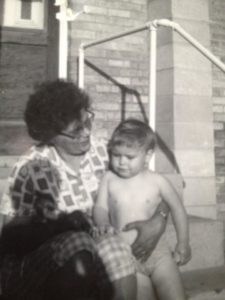
There is a conversation unfolding on my social media debating whether “Pride” related topics belong in schools, specifically elementary schools. Specifically local, rural elementary schools. I have too much to say on this to try to engage with a pithy smart ass remark. So I’ll collect my thoughts here for whoever chooses to read them.
Teaching about the world is the job of schools. Teaching students to navigate in the world, to develop skills, values, perspectives that will help them navigate the world. Helping students navigate their inner world is also important and many young people don’t get nearly enough support in that regard.
Teaching about the world is also a job for parents and extended family and other community supports, spiritual communities, youth organizations and so on. Helping young people navigate their inner world is also important and, I repeat, many don’t get nearly enough support in that regard. In particular, some kids don’t get to feel safe or loved at home for who they really are.
I know some of this because I grew up in a rural farming community, surrounded by church-going folk. I attended a tiny elementary school and you can bet that in the 1970’s there was no talk of any “alternate lifestyles”. There was one way to be and by God that was what you were going to be, come Hell or high water or getting the sense beat out of you. Literally.
I consider myself lucky in so many regards to have been raised where and when I was. But I will say this. I was raised to be thoroughly dishonest with myself. I was raised to be filled with self-hatred. Because every signal, every nuance, every raised eyebrow, every derogatory remark about gay people was about me. Everyone around me hated gay people, mocked them. And I knew from a young age I was gay. So … self-hatred or exile. These were my choices.
I probably realized in my mid-teens that I was queer and I was horrified. Imagine – being horrified at something that is an essential, non-negotiable part of your being. Like being ashamed of having green eyes or brown hair or being left-handed. It just … is.
I didn’t want to lose my family so I chose to fill my inner world with self-hatred. Because being honest was far, far too frightening.
I’m trying to imagine what it would have been like had I been born more recently and attended schools where the concept of many possible life paths had been at least presented without mockery or judgement. Just … as another part of the world. Here is the world. As you navigate through it, you’ll meet queer people. Some are lovely. Some are less so – just like, oh, everyone else. Just … people.
If someone, somewhere had said something nice about gay people when I was a child, I would have had a bit of hope, a glimmer of some kind of light in the dim self-hatred that I clung to. But that wasn’t the time for such perspectives. I’m grateful that my suicide attempt at age 17 was half-hearted and easily thwarted. But it does form part of my story.
Many rural kids leave their rural origins for lots of reasons – more opportunities, post-secondary education, turning boredom into adventure. Queer kids leave their home communities when it feels safer to go than it does to stay. They leave so they can find their people. Often, that means the nearest big city. Once they have found their “tribe”, their chosen families, the people that accurately reflect back to them who they feel they really are, in honesty … coming home to the family of origin is very difficult. There is familiarity and yet there is a strange invisibility. The people that should know you best really do not. Nor, in many cases, do they wish to. Queer adults often feel like strangers amongst the people they have known and loved the longest.
So I’ve had to find my way through both the self-hatred and the exile, as it turns out. I wouldn’t wish that journey on anyone’s child and yet, again, I’m grateful. The people I’ve met, really good people. The communities and connections I’ve built. The inner strength and fortitude to handle just about anything – not an invitation, universe, back off baby – the patience I’ve had to develop to deal with truly ignorant people. These are some of the gifts of my journey.
Think of Pride in schools as a suicide prevention strategy. Here are some statistics, courtesy the Trevor Project:
Suicide is the second leading cause of death among young people aged 10 to 24 (Hedegaard, Curtin, & Warner, 2018) — and lesbian, gay, bisexual, transgender, queer, and questioning (LGBTQ) youth are at significantly increased risk.
LGBTQ youth are more than four times as likely to attempt suicide than their peers (Johns et al., 2019; Johns et al., 2020).
The Trevor Project estimates that more than 1.8 million LGBTQ youth (13-24) seriously consider suicide each year in the U.S. — and at least one attempts suicide every 45 seconds.
The Trevor Project’s 2022 National Survey on LGBTQ Youth Mental Health found that 45% of LGBTQ youth seriously considered attempting suicide in the past year, including more than half of transgender and nonbinary youth.
Removing “Pride” from schools, or children from “Pride” topics will not result in fewer queer or trans kids. It will result in children being terrified to talk to their parents and families about who they really are. “If my Mom doesn’t like Pride, I must be bad.” You won’t know that is even happening for your children until they get brave enough to tell you, probably in anger or terror, when they are adults. If they survive.
By being afraid of, or angry about, “Pride” being taught in schools, parents condemn their own children to self-hatred, possibly self-harm, and a painful choice in the future to leave to find safety elsewhere. For those kids who are not queer, you are training them to be “ok” with hating people. Just people. No better, no worse than anyone else.
Too many sad old stereotypes are being played out in my beloved Ted Lasso and it is making me sad. We are a few days away from the final episode of Season Three being released and I wish I was feeling better about it. For a show that has challenged so many tropes … it clings to a few about “my tribe”.
Lesbian as predator. Jack’s funding of KJPR was clearly predatory, an attempt to capture Keeley. This predator role is, in reality, much more the purview of straight white men.
Lesbians can’t have healthy relationships. Keeley/Jack was NEVER healthy, balanced or truly supportive. Meanwhile, all the other relationships in the show are modelling growth and healthy honesty, vulnerability. Apparently, lesbians can’t do that in the world of Ted Lasso. Why?
Lesbian relationships can’t last. In fairness, Rebecca hasn’t had something last, romantically speaking.
Straight guy will show straying woman true love. This one bothers me the most, I think, although the predatory stigma stings also. Here comes newly vulnerable, emotionally honest Roy to save the day. I like Roy. I like Keeley. I like them together. I don’t like that a feeble attempt at showing a lesbian relationship has resulted in Keeley and Roy reuniting. Meanwhile, Colin gets to be embraced and loved for who he is. Great and also … why can’t the gay woman exist happily in this universe? Why does she have to be straight again?
Just once, I’d love to see a lesbian as a hero, as strong, independent, capable, and able to partner with someone else strong, independent and capable in a healthy way. Why is this so difficult?
Answering my own question … it is difficult because men are writing the scripts and producing the work. A woman who does not need a man is a threat. We can’t have that.
We (lesbians) can’t have nice things, apparently. I await some future iteration, perhaps Theodora Lasso, Ted’s grandaughter maybe, who sets things right.
Me: OK … well, about a year ago, we started planning renovations with Mike and Lisa, so that is good.
Sally: Sure – they are nice.
Me: Yes.
Sophie: … messy, disruptive, noisy …
Me: They put in your heated floor in the new bathroom.
Sophie: Oh, I love them.
Me: Specifically, Mike did that. Thank him when he comes back on Friday.
Sophie: I will refrain from leaving a hairball in his shoes.
Me: That will do. I had SO MUCH FUN designing the spaces with Lisa. I didn’t realize how much fun that would be.
Sally: …
Sophie: …
Me: Anyway, we’ve been in a global pandemic since March 2020 … that has been stressful. Two years now.
Sally: Is that why humans come into the house wearing muzzles?
Me: Those are masks, not muzzles. But yes. So, a year ago, people thought maybe the pandemic might be over. And we had a pretty ok summer, pandemic-wise.
Sally: …
Sophie: …
Me: In July, Big Dee collapsed on the deck in front of me. Turns out he was really sick.
Sally: I knew he was sick for a while.
Me: Yes, I think you did. … We lost him later in July. It was awful.
Sally: I miss Big Dee.
Sophie: To my surprise, I miss him too.
Me: I miss him so much. I still can’t believe he isn’t here.
Me: I sold my pink Barbie boat and bought a refurbished non-Barbie boat.
Sally: YES! That was awesome.
Me: It is pretty awesome. I named it after Big Dee.
Sophie: You never name anything after me.
Me: Nothing as beautiful as you has happened yet.
Sophie: Oh. Yes, that makes sense.
Me: Moving on … there was some family stuff in the fall – do you remember that?
Sally: When you were out on the deck in the rain trying to get a cell signal? A bunch of times?
Me: Yes, that was it. On the “up” side, we got a quick visit from Angela around birthday time, so that was a treat.
Sally: She is nice.
Sophie: She likes me a lot.
Me: Yes, she does. … later on in the fall, we moved upstairs so the kitchen reno could start … that was … interesting …
Sally: Yes! I remember that!
Sophie: I remember being under a bed for six weeks.
Me: Yes, I’m so sorry about that.
Sophie: There was a huge dog upstairs with big teeth.
Me: Yes. I’m so sorry.
Sally: What happened to Mr. Handsome?
Me: He is living his best life on a farm. He didn’t really fit in here as well as we’d hoped.
Sally: … I guess not … but being the only dog doesn’t really suit me.
Me: I know, sweetheart.
Sophie: Suits me.
Me: I know … and we will return to this subject … moving on … we moved back downstairs in December … and I started to enjoy my new kitchen …
Sally: I like it. It is bigger. There are more high traffic areas for me to sprawl out on while you are cooking.
Me: Yes, I noticed.
Sophie: I like the heated floor.
Me: That is in the bathroom.
Sophie: Best room in the house.
Me: I’m glad you like it … moving on … So, I had planned a big Christmas trip for December after the grades were in. Sally, we were supposed to go on two big Ontario road trips, first to see family in Thornbury, and our friends in K/W including crazy dog RayLynn, then a big dinner with friends in St. Catharines, including your little friend Bella, and then to Strathroy for more family … and maybe a stop in Drumbo … it was going to be great.
Sally: Did we do that trip?
Me: Nope. The pandemic returned with something called Omicron.
Sally: Darn. That sounded like a fun trip.
Me: Friends were going to visit after Christmas and then we were going to do road trip part two to Ottawa for New Years … none of it happened because … Omicron.
Sally: I don’t like pandemic stuff.
Me: Me either … I haven’t seen “my people” for literally months … moving on … my job is a bit weird right now. We are employing “work to rule” strategies to motivate management to negotiate. That started in December. It keeps escalating … Stressful.
Sally: …
Sophie: …
Me: The renos aren’t quite finished yet, for 1,000 reasons, and we are living in a partial construction zone. Nothing is stored in its rightful place yet and it is starting to feel quite claustrophobic. To me anyway.
Sally: I hadn’t noticed.
Sophie: Me either other than its a bit of an obstacle course around here.
Me: I know. It is discombobulating.
Sally: Big important word.
Me: Big word, not that important really.
Sally: OK.
Me: There is a war happening that is pretty awful. There is almost always a war happening somewhere. This one is just as horrible, unfair, and shocking as most wars are.
Sally: Is that like a dog fight in the park?
Me: … mmm … yes, sure. But with more dogs than you can count and the fights end in death and destruction.
Sally: OH! that sounds awful and confusing and unnecessary. My “fights” only last about ten heartbeats and I’m just trying to show that I’m strong. No one gets actually hurt.
Me: I know … War is a terrible, stupid choice for resolving differences and many humans are sad and stressed about it.
Sally: I know you are stressed.
Me: Yeah … everything is starting to get more expensive and that is also stressful.
Sophie: Can you still pay the hydro bill for the heated floor?
Me: Yes, so far that is ok.
Sophie: Phew.
Me: So, it has been a long, dark, lonely winter. And as Uncle Gin said the other day, no one is really doing well right now, mental health wise.
Sally: Are you ok?
Me: I’m “ok” but I’m really tired of waves of bad news. And I’m stuck in my personal routine which involves a lot of sitting at the computer. So I could be better. I feel we need … I need … some new energy in the house. It will be spring soon and I don’t want to feel so weighed down. And, Sally, I think you need a friend.
Sophie: … I don’t think I like where this is going …
Sally: This sounds awesome so far … go on …
Me: So … I think we need … A PUPPY!!!
Sally: Yay … wait, what? What is a puppy?
Sophie: You’ve GOT to be kidding.
Me: Sally, a puppy is a baby doggie that will grow up to be your friend. It’s going to be great. You both have a job to do. You can help me train him! Sophie, you can teach him how to respect cats.
Sophie: … (looks for lawyer’s email address) …
Me: Hang on Sophie, remember how you and Big Dee made friends eventually? This will be even easier than that. We are starting from a blank slate. This puppy has never even met a cat yet.
Sophie: … (dubious) …
Me: You’ll see.
Sally: When the puppy arrives, will you still love me?
Me: Oh, sweetheart – always. You are so patient with me. You’ll need to be patient while we train him. I think you are going to love having a little brother and I’m going to love watching you teach him.
Me and Sally, July 30, 2021
Sally: Okay! Let’s do this!
Sophie: (closes eyes) … Jesus, Mary and Joseph … Can we block off the bathroom with the heated floor so I can get in and he can’t?
Me: No … BUT … you will always be the only pet allowed on the bed with me.
Sophie: … (still dubious) ok … bring it on …
Me: If the weather holds, I’ll be bringing him home tomorrow. Buckle up!
I am about eight years old and in need, in my mind, of an after school snack. My favourite, which I can manage on my own, is melted cheddar cheese on white bread. I just slice cheese, put it on bread, and pop it in the toaster oven. No sweat.
I have to manage on my own. There are a total of 12 people in this huge house. Mom is busy.
I’ve been thinking of this cheese snack for a while on the bus. Eagerly, I go the fridge and look at the place where cheese is kept. There is a sliver of cheddar, about two bites of cheese. No where near enough, in my mind, to manufacture my snack. Tomorrow is grocery day so this is it. I hold in my small hand the full inventory of cheese in the house.
I … lose it. This doesn’t happen often but on this particular day, I lose it. What does this look like? I’m not sure but I think I’m pretty loud. There are tears. Clearly, I’m old enough to not hurt myself with a knife or a hot toaster oven, but not old enough to get it together in the face of nutritional disappointment.
Mom appears, bustling. I’m standing with the fridge door open, holding this pathetic excuse for cheese, wailing.
Assessing the situation, Mom takes me over to the kitchen table. No anger, some reassurance, no hugs or cuddles. This is a teaching moment.
She sits at the table with two bread slices in front of her, I kneel on a chair seat, elbows on the table, to watch. I’m completely skeptical that anything good can come of this, but I’ve stopped crying.
Wordlessly, with precision and patience, Mom slices the cheese in matchstick-like slivers, producing more slivers than I would have thought possible. Then she arranges them on the bread in such a way that most of the bread real estate is covered, or it will be when the cheese melts. Moments later, I have perfect cheese toast in front of me.
I’m stunned and a bit ashamed to have made a fuss. I’m only eight but the impact of what just happened resonates deeply.
True, sometimes there is no “cheese” at all and moving forward, finding success or contentment, is hard. Disappointment is hard.
Mom taught me to step beyond the disappointment and ask a different question: What have we got to hand and what can we do with it? So often, in my life, creating a work-around has led me to a better place than my original plan would have.
I’m so grateful she was the person she was. No nonsense, pragmatic, fun. Missing her always.
I’m trying to order some parts for the BBQ that is on the upper deck for the renters, hoping to freshen it up with a new grill surface and heat diffusers for less than the cost of buying a new grill entirely.
When my online order wouldn’t complete, I wound up on the phone with a customer service agent.
Phone Call #1: CSR: (Unintelligible) Grills Me: Hi – I’m trying to finish an order on your website and I keep getting the message to call this number first. CSR: OK – can you give me the SKU or order number?
(information given) CSR: OK – we have to import that part into this country – erm, I mean, into this warehouse – so it will take about two weeks to get to you. Is that ok? Me: Yes, I can live with that. Will the price go up? CSR: No, it will just be delayed. Please give me a moment.
(keyboard keys clacking) CSR: OK, if you refresh your screen now, the order should process properly now. Me: Great – thank you. CSR: No problem.
It wasn’t clear to me during this conversation whether I’d called the US or Canada. The person didn’t have any particular accent that I could place and the 877 number could be anywhere in North America.
I proceeded to the shopping cart, confirmed that the price hadn’t gone up, and hit “submit”.
In the “Thank you for your order!” confirmation message, the price had doubled and I nearly fell over. What was a $40 part with $7 shipping was now over $85.00. Huge increase in shipping that was not reflected earlier EVEN THOUGH the system had my address.
Phone Call #2: CSR: (Unintelligible) Grills Me: Hi – I was just on the phone with someone about an order I was trying to make. Was that you? CSR: (pause) Yes. Me: Well, I thought you said that the price of the part wasn’t going to increase … CSR: (interrupting, defensively) It didn’t. The part itself is still $40. Me: OK, but … CSR: (interrupting, defensively) You are in Canada, right? We are in Florida. Shipping into Canada is expensive and YOU have to pay for that. Me: OK. Can you cancel my order please? CSR: What? Me: Please cancel my order. I had no idea the increase in shipping would be so dramatic. CSR: (snippy) Fine, I’ll cancel it.
This isn’t anywhere on the scale of detention centres for children or cutbacks in health care or education. But I have to wonder if it is on the spectrum of “Trump as a leader brings out the worst in people, not their best”.
Once a significant segment of a population has permission to be at their worst, anything can happen. And has.
I was having such a lovely weekend. Truly. Granted it was the first time in ages that I’d been around that many white people for several days in a row. Sure, it was heteronormative, as far as I could tell, but at least “not hostile” to queer folk. Well-meaning and good-hearted, as far as I could tell.
You were a real gem. Kind, vulnerable. Funny, willing to put yourself out there and be teased. Respectful, as far as I could tell.
Then, in the final few hours of the event, you had to go and make that racist joke, for no reason, out of the blue.
I felt my heart stop and my face freeze. Really … did I just hear that?
I did. You didn’t get the reaction you were looking for from the people around you and you went further. I took some comfort that I wasn’t the only one who didn’t laugh and conversation picked up elsewhere.
There is a moment in Marilyn French’s book, The Women’s Room, in which Mira’s “perfect” male partner, Ben, simply assumes that Mira will drop her career and the rest of her life because he has been asked to move to Africa as part of a job advancement. After months of “seeing” Mira as a whole person, his male privilege – so ingrained – simply erases her as an individual and she becomes his appendage. With one sentence.
You “Ben’d” me. You bend me. You bent me.
Heaven knows, I’m not perfect. I’m not proud of the amount of white-classist-racist-privileged-gendered-homophobic crap that has come out of my mouth over the years. I’m trying to pay attention and I know I’ve done a lot of work. But you … you had no idea what had gone wrong in our budding friendship.
I failed in my personal mission of calling people directly on their crap. In that moment, I didn’t want to be the strident judgey person who polices everyone’s remarks. It was such a nice weekend, after all. Strident is a word we only use for women, so I should say I didn’t want to be that strident bitch who polices conversation. So I police myself. I withdrew and stopped investing in connecting with you. I made a choice to not ruin the overwhelmingly positive energy of the weekend. For you and for others, that is. Your remark had already slapped a barnacle on it for me. I spent the next several hours trying to picture how to draw you aside and explain what had happened without making the weekend’s good vibes completely dissipate. I’m supposedly good at communicating but I couldn’t figure this one out. And it is still bothering me.
I’m glad you had a great, amazing weekend with no barnacles. I had a really good weekend with some really amazing parts and a serious barnacle that won’t let go.
I was doing a bit of spring cleaning over the weekend, pulling everything out of a closet. At the bottom of a pile of random “stuff” was Freddie’s electric blanket. In the last year or so of her life, I had put this electric blanket on “low” under her bed and she seemed to appreciate it. After she died, I quickly tossed or donated most of her things except one shirt, one little blanket and this electric blanket.
(RIP Freddie, co-pilot and canine companion for 18 years, 7 months. October 2, 1997 to May 26, 2016.)
It was filthy, I remember thinking at the time, and I didn’t have the ability to figure out how to wash or clean an electric blanket. It seemed a near impossible task to me, figuring out how to clean this polar fleece fabric with wires in it. Like being asked to do some complex calculations in my head. I’ll deal with it later, I thought, and I tossed it into the bottom of a closet. Out of sight, out of mind.
So it has sat at the bottom of this particular closet for nigh on two years. As I pulled it out, I noticed the care label, quite clearly displayed, on the “down” side of the blanket. “Machine wash … dry on low”.
Oh. Not that hard, then. It is all clean now, folded and put away properly in the linen cupboard.
What I couldn’t face, I think, was the cessation of what had become a beloved routine. Freddie needed to go outdoors first thing for her business and I would carry her in my arms and set her down gently on the grass or snow. I’d move the electric blanket, a moisture pad (which was just a precaution between her and the electric blanket), and her bed from the bedroom to her spot by the computer. I’d go back out to see if she was ready to come in. She wasn’t capable of getting very far but she was usually enjoying having a sniff around the grass or snow. She might even bark at some smell or some perceived “thing to be barked at”. Maybe my neighbour Jim would come over and pat her as he adored her, too. I’d come in and I’d get her breakfast ready. Eventually, I’d tuck her into her spot in her bed by the computer and my day could begin.
She went out for outdoor visits several times during the day. Bedtime would come and the routine would run in reverse, with the blanket/moisture pad/bed moving back to the bedroom.
Caring for this elderly creature felt like a sacred duty and it made me oddly happy and serene. It bears mentioning that my relationship of seven years had officially ended Labour Day 2015, after dragging on painfully for too many years. Caring for Freddie was, for me, a nurturing that fed my wounded soul.
Big Dee arrived in my life in late Fall 2015 and, to be honest, he couldn’t figure out why I was keeping this smelly senior around. I think it wounded his pride to know he was, as dog hierarchy goes, inferior to this old girl. In truth, I think it was not a bad idea for him to learn his place. In his mind, I’m sure, he was hoping she’d head off on a long walk into the woods one day and he’d have me all to himself.
I always thought I’d wake up one day and find that she had died in her sleep. That is not what happened. That last weekend, the long weekend in May 2016, she slipped several notches in function, becoming disoriented, seemingly blind, confused. She was no longer herself. It was time, and I had to make that dreaded decision pet owners (owners? parents? stewards? companions?) have to make. It was hard. It was necessary. And I had to be pushed a bit to get it done.
My desk area has changed and a bookcase now stands where her bed was. A night stand has now filled in the spot in the bedroom that used to be hers. Sally has joined the crew now … life moves on. I think the electric blanket was the last piece of unfinished business remaining from that time. I’ve put it away now. But that won’t stop me from glancing over occasionally, as I’m sitting here at the computer, and remembering her little face looking up at me, wondering if it is time to go out yet.
Posted on January 8, 2017 by Venus in renting, travel
I spent New Year’s weekend with dear friends in Ottawa. For the first time ever, I left my vacation rental, the upper floor of my house, in the hands of complete strangers.
What could go wrong? (She asked with trepidation.)
In fact, some things did go wrong but not nearly as wrong as they could have. There was no significant damage, a few small items went missing, and the cleaning of the unit wasn’t up to a “rentable” standard. Renters are asked to return the unit to the state in which they found it. A few rules were broken (i.e. no fireworks) and they left behind a HUGE amount of garbage. At least most of it was in bags.
After a few emails back and forth, I settled on returning only half their deposit money and using the balance to hire my local and reliable cleaners to put the place to rights. This is, in fact, the purpose of the deposit system.
Here are some takeaways I’ve arrived at from this episode.
a) Emotional response: I just couldn’t confront the relatively minor mess inside, and the bigger mess on the deck. I felt affronted that people wouldn’t read the departure checklist and take an hour to do some simple things like strip the beds and run the vacuum around. I managed to get the deck in shape myself, after animals had investigated the three bags of food garbage left out there. But without help, I simply wouldn’t have gotten to the inside clean-up. It wasn’t a time thing or an “I’m too good to clean” thing. I was offended.
Some of my renters, the ones who are crossing over into friend turf now, asked me over beverages at the firepit last summer if I felt “invaded” by people in my space. I really don’t. It actually pleases me to hear laughter and conversation upstairs, and to see people at the waterfront enjoying themselves. The vast majority of people have been pleasant, respectful and really great to have around. The rental unit itself no longer feels like “my space”.
But, clearly, I feel like I’ve been kicked when I inspect afterwards and find myself underwhelmed with the care taken of the space after I’ve carefully prepared it for the comfort and ease of the guests.
b) It wouldn’t have mattered if I was home. The only thing I might have been able to catch if I were home would have been the fireworks going off. Unless I’m specifically asked, I don’t inspect the place with the renters standing there. On one or two occasions, some groups have asked me to complete the inspection so they could be assured that they would be getting their deposit back. Fair enough. But if I’d been home, I don’t think the outcome of this rental episode would have been materially different.
c) Don’t go there. My reliable cleaners, bless them, are good people who have not much experience beyond the local area. They asked me after cleaning if the renters had been “foreign”. Not thinking, I said yes, and named the country of origin of this rental group. This caused one of the cleaners to launch into a monologue about people from elsewhere.
The speed with which this exchange went from friendly chat to political diatribe was mind-boggling and I stupidly didn’t see it coming. At least I was quick enough to nip the monologue in the bud to point out that the origin of the rental group was not the problem. Maturity, adherence to rules, possibly lack of on-site supervision (they could get away with it), and just plain ol’ “did your mother let you leave your room like that?” … and don’t tell me that there are not home-grown Canadian travellers who have trashed hotel rooms, pensions, and bed/breakfast rooms. Bollocks.
This is the stuff we’ve got to nip in the bud – the finger-pointing and blaming anything we don’t like about a person’s behaviour on that person’s “otherness”. This always defies logic. Hearing it and confronting it is more important now than ever before. Please, if you are reading this, join me in not letting this stuff fester in our conversations because this is how such monochromatic beliefs are formed and reinforced.
Yesterday, Christmas Eve, would have been my Mom’s 93rd birthday. As with most Christmas Eves, I spent it with her in mind. I have created a new tradition in which I float a candle down the river on a paper boat on Christmas Eve, in her honour. However, this year, there is 18 inches of thick wet slippery snow on the docks, plus a few layers of ice, and I suspect that Mom would understand me not wanting to join her in the Great Beyond just yet. So I skipped that part.
Instead, I baked. Peanut butter chocolate chip cookies, date squares and orange coconut chews. I love it when my kitchen smells like my Mom’s kitchen.
One of the bits of math I do from time to time is to consider my current age (53) against what my Mom would have been doing at the same age. When my Mom was 53, I was 13. Yikes. I can’t imagine having a 13 year old, two adult sons, and a full household to run. I don’t know how she did it. Â My life is pretty sloth-like compared to hers.
I miss her every day. Her funny wisdom, practicality, and child-like wonder at all the new things the world was churning out.  The endless cribbage games and cups of tea and coffee. I hope she has found some decent euchre players in heaven.